Table of Contents
- Introduction – Paying Taxes Is Required, Overpaying Is Optional
- What Does “Reducing Tax Liability” Really Mean?
- Why Small Businesses Often Overpay Taxes
- The Foundation: Clean Bookkeeping & Records
- Common Business Tax Deductions You Should Not Miss
- Small Business Tax Tips That Reduce Liability
- NJ & PA–Specific Tax Considerations
- Tax Credits vs. Tax Deductions (Know the Difference)
- Tax Planning vs. Tax Filing (The Critical Difference)
- Common Tax Mistakes That Increase Liability
- How Professional Tax Planning Reduces Liability
- When Should You Start Tax Planning?
- Legal vs. Aggressive Tax Strategies
- FAQs
- Conclusion – Pay Less Tax by Planning Smarter, Not Riskier
INTRODUCTION – PAYING TAXES IS REQUIRED, OVERPAYING IS OPTIONAL
Every small business in New Jersey and Pennsylvania must pay taxes.
But far too many businesses pay more tax than legally required not because they earn more, but because they miss opportunities.
Here’s the truth most business owners learn too late:
The IRS does not penalize you for paying less tax only for paying incorrectly.
If you:
- Don’t understand deductions
- Don’t plan ahead
- Don’t track expenses properly
- Don’t structure your business efficiently
…you may be voluntarily increasing your tax bill every year.
This guide explains how to reduce your small business tax liability legally, using strategies that comply fully with federal and state laws while maximizing deductions and credits.
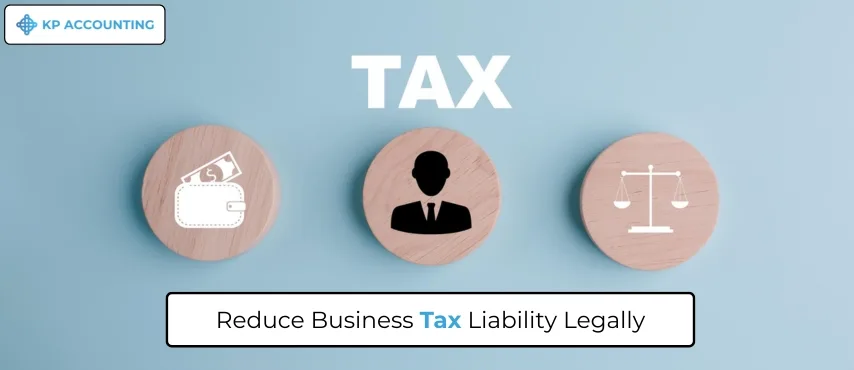
WHAT DOES “REDUCING TAX LIABILITY” REALLY MEAN?
Reducing tax liability does not mean:
- Hiding income
- Cutting corners
- Risky tax schemes
- Aggressive or questionable tactics
Reducing tax liability legally means:
- Paying only what the law requires
- Claiming all eligible deductions
- Using credits and incentives correctly
- Structuring your business efficiently
- Planning before year-end
The tax code federal and state is designed with legal ways to reduce taxes for businesses that understand and apply the rules correctly.
WHY SMALL BUSINESSES OFTEN OVERPAY TAXES
Most small businesses overpay taxes for predictable reasons.
1. No Year-Round Tax Planning
Many businesses only think about taxes at filing time when it’s too late to change outcomes.
2. Poor Bookkeeping
Missed expenses = missed deductions.
3. Incorrect Business Structure
The wrong entity type can dramatically increase tax liability.
4. Fear of Audits
Some owners avoid deductions they are legally entitled to.
5. Mixing Personal & Business Finances
This causes confusion and lost deductions.
6. Relying Only on Software
Tax software follows rules but does not plan strategically.
THE FOUNDATION: CLEAN BOOKKEEPING & RECORDS
Before any tax strategy works, your records must be accurate.
Why Bookkeeping Matters for Tax Reduction
- Tracks deductible expenses
- Supports audit-proof documentation
- Provides accurate financial reports
- Enables proactive planning
Key Recordkeeping Best Practices
- Separate business and personal accounts
- Categorize expenses correctly
- Save receipts digitally
- Reconcile accounts monthly
Without clean books, even the best tax strategy fails.
COMMON BUSINESS TAX DEDUCTIONS YOU SHOULD NOT MISS
Business deductions directly reduce taxable income.
Below are core business tax deductions many NJ & PA businesses overlook or underutilize.
1. Ordinary & Necessary Business Expenses
The IRS allows deductions for expenses that are:
- Ordinary in your industry
- Necessary for business operations
Examples:
- Office supplies
- Software subscriptions
- Marketing and advertising
- Professional services
- Utilities
- Insurance
2. Home Office Deduction (If Eligible)
If you work from home regularly and exclusively, you may deduct:
- A portion of rent or mortgage
- Utilities
- Internet
- Home maintenance
This deduction is legal but must be documented correctly.
3. Vehicle & Mileage Deductions
Business use of a vehicle may qualify for:
- Standard mileage deduction or
- Actual expense deduction
Tracking mileage properly is critical.
4. Equipment & Asset Purchases
Many assets can be:
- Depreciated over time
- Or expensed immediately (when eligible)
This includes:
- Computers
- Machinery
- Furniture
- Tools
5. Payroll & Employee Benefits
Deductible costs include:
- Wages
- Payroll taxes
- Health insurance
- Retirement contributions
Payroll deductions are a major tax-saving opportunity.
6. Retirement Contributions
Business owners can reduce taxable income through:
- SEP-IRAs
- Solo 401(k)s
- Employer retirement plans
These reduce taxes and build long-term wealth.
SMALL BUSINESS TAX TIPS THAT REDUCE LIABILITY
These strategies go beyond basic deductions.
TIP 1 – Choose the Right Business Entity
Your entity type affects:
- Income taxes
- Self-employment taxes
- State obligations
Many NJ & PA businesses overpay simply due to outdated structures.
TIP 2 – Time Income & Expenses Strategically
Tax planning includes:
- Deferring income
- Accelerating expenses
Timing matters especially near year-end.
TIP 3 – Use Retirement Plans to Reduce Taxable Income
Retirement plans reduce current taxes while preparing for the future.
TIP 4 – Review State & Local Tax Obligations
NJ & PA businesses may qualify for:
- State-specific deductions
- Credits
- Incentives
Ignoring state planning leaves money on the table.
TIP 5 – Track Estimated Taxes Accurately
Overpaying estimated taxes hurts cash flow.
Underpaying leads to penalties.
Accurate planning avoids both.
NJ & PA–SPECIFIC TAX CONSIDERATIONS
Businesses operating in NJ & PA face unique factors.
New Jersey Considerations
- State income tax structure
- Payroll-related taxes
- Business registration fees
Pennsylvania Considerations
- Flat income tax rate
- Local earned income tax
- County-level requirements
Understanding local rules is essential for reducing overall liability.
TAX CREDITS VS TAX DEDUCTIONS (KNOW THE DIFFERENCE)
Tax Deductions
- Reduce taxable income
Tax Credits
- Reduce taxes owed dollar-for-dollar
Credits are more powerful but often missed.
Examples may include:
- Hiring-related credits
- Energy-related credits
- State incentive programs
Eligibility depends on business type and activity.
TAX PLANNING VS TAX FILING (CRITICAL DIFFERENCE)
Tax Filing
- Reports past activity
- Compliance-focused
Tax Planning
- Looks ahead
- Strategy-focused
- Identifies opportunities early
Most tax savings come from planning, not filing.
COMMON TAX MISTAKES THAT INCREASE LIABILITY
Avoid these costly errors:
- Missing deductions
- Misclassifying expenses
- Ignoring depreciation
- Failing to plan quarterly
- Poor documentation
- Relying solely on software
- Not consulting a professional
Each mistake quietly increases taxes.
HOW PROFESSIONAL TAX PLANNING REDUCES LIABILITY
Working with a professional helps you:
- Identify overlooked deductions
- Optimize entity structure
- Plan year-round
- Stay compliant
- Reduce audit risk
The cost of professional help is often far less than the tax savings achieved.
WHEN SHOULD YOU START TAX PLANNING?
The best time is:
- Before year-end
- Before major purchases
- Before hiring
- Before business growth
Waiting until filing season limits options.
LEGAL VS AGGRESSIVE TAX STRATEGIES
Legal strategies:
- Follow the law
- Are documented
- Are sustainable
Aggressive strategies:
- Increase audit risk
- Create penalties
- Often fail long-term
Reducing tax liability legally protects your business.
FAQs
How can I reduce my small business tax liability legally?
You can reduce tax liability by claiming eligible deductions, using retirement plans, choosing the right business structure, keeping accurate records, and planning taxes year-round.
What are common business tax deductions?
Common deductions include operating expenses, payroll costs, home office expenses, vehicle use, equipment purchases, and professional services.
Do small businesses in NJ & PA need tax planning?
Yes. State and local taxes add complexity, making proactive tax planning essential for reducing overall liability.
Is tax planning different from tax filing?
Yes. Tax planning focuses on future strategies to reduce taxes, while tax filing reports past financial activity.
Can a CPA help reduce tax liability?
Yes. A CPA helps identify deductions, credits, and strategies that reduce taxes while ensuring compliance with the Internal Revenue Service and state authorities.
CONCLUSION – PAY LESS TAX BY PLANNING SMARTER, NOT RISKIER
For small businesses in New Jersey and Pennsylvania, reducing tax liability is not about shortcuts, it’s about knowledge, preparation, and proper planning.
When done correctly, legal tax reduction:
- Improves cash flow
- Supports business growth
- Reduces stress
- Lowers audit risk
The businesses that pay the least tax are not the ones taking risks, they are the ones planning ahead.
If you want to reduce your small business tax liability legally and confidently, professional guidance can make all the difference.
Are You Paying More Business Tax Than You Should?
Many small businesses overpay taxes simply because they don’t plan ahead. A quick review can uncover missed deductions and legal tax-saving opportunities.