
Table of Contents
- Introduction – Growth Without Data Is Guesswork
- What Are Financial Reports?
- The Importance of Financial Reports for Business Owners
- Profit & Loss Statement (Income Statement)
- Balance Sheet: Your Financial Snapshot
- Cash Flow Statement: The Lifeline of Growth
- Financial Reporting Benefits for Small Businesses
- How Financial Reports Drive Business Growth
- Common Financial Reporting Mistakes
- NJ & PA Specific Financial Considerations
- How KP Accounting Uses Reports Strategically
- Monthly vs Quarterly Reporting
- Financial Reports & Tax Planning Integration
- Financial Reports for Different Business Types
- When Should You Review Financial Reports?
- FAQs
- Final Thoughts: Growth Requires Financial Clarity
Introduction – Growth Without Data Is Guesswork
Many small business owners focus on:
- Sales
- Marketing
- Customer acquisition
- Hiring
But overlook the one tool that determines whether growth is sustainable:
Financial reporting.
If you operate a business in New Jersey or Pennsylvania, structured financial reports are not just helpful, they are essential.
The reality is simple:
Businesses that understand their numbers grow faster and survive longer.
This comprehensive guide explains:
- The importance of financial reports
- Financial reporting benefits for small businesses
- How financial statements drive business growth
- Common reporting mistakes
- How KP Accounting transforms reports into strategy
What Are Financial Reports?
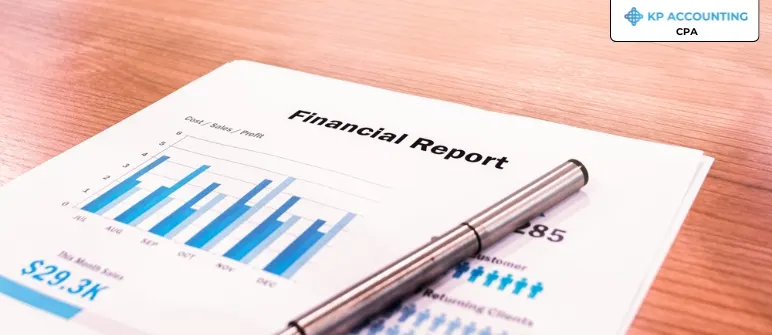
Financial reports are structured summaries of your business’s financial performance and position.
The three core reports include:
1. Profit & Loss Statement (Income Statement)
2. Balance Sheet
3. Cash Flow Statement
Together, they form the backbone of business intelligence.
The Importance of Financial Reports for Business Owners
Financial reports provide clarity in areas such as:
- Profitability
- Cash flow stability
- Expense management
- Debt exposure
- Growth sustainability
- Tax planning
Without them, decisions are based on assumptions.
With them, decisions are strategic.
Profit & Loss Statement (Income Statement)
What It Shows:
- Revenue
- Cost of goods sold
- Operating expenses
- Net profit
Why It Matters:
- Identifies profit margins
- Detects rising expense categories
- Measures performance trends
For NJ & PA businesses, this report directly impacts:
- Tax planning
- Estimated tax payments
- Expansion decisions
Balance Sheet: Your Financial Snapshot
The balance sheet shows:
- Assets
- Liabilities
- Owner equity
It answers critical questions:
- Is the business financially stable?
- Is debt manageable?
- Is working capital sufficient?
Lenders rely heavily on this report.
Cash Flow Statement: The Lifeline of Growth
Many profitable businesses fail due to poor cash flow.
Cash flow reports track:
- Cash coming in
- Cash going out
- Operating vs investing activities
Strong cash flow supports:
- Hiring
- Expansion
- Equipment purchases
- Loan repayments
Financial Reporting Benefits for Small Businesses
Let’s break down the real financial reporting benefits.
1. Better Decision Making
Data replaces guesswork.
Example:
Instead of assuming marketing works, reports show actual ROI.
2. Early Problem Detection
Financial reports reveal:
- Declining margins
- Rising expenses
- Cash shortages
- Inventory inefficiencies
Early detection prevents crisis.
3. Tax Optimization
Accurate reports help:
- Project taxable income
- Plan deductions
- Avoid underpayment penalties
- Optimize entity structure
This is where CPA insight becomes crucial.
4. Improved Access to Funding
Banks and investors require:
- Clean financial statements
- Consistent reporting
- Trend analysis
Poor records often result in loan rejection.
5. Stronger Budgeting & Forecasting
Business growth reports allow you to:
- Forecast revenue
- Plan hiring
- Budget marketing spend
- Prepare for seasonal changes
How Financial Reports Drive Business Growth
Growth requires:
- Capital
- Strategic allocation
- Measured risk
Financial reports enable:
✔ Expansion planning
✔ Controlled scaling
✔ Expense optimization
✔ Profit margin analysis
✔ Resource allocation
Without reporting, growth becomes reactive.
Common Financial Reporting Mistakes
Avoid:
- Updating books only at tax time
- Mixing personal & business expenses
- Ignoring monthly reporting
- Not reconciling accounts
- Using outdated reports
Reports must be accurate and timely.
NJ & PA Specific Financial Considerations
Businesses in New Jersey face:
- Progressive tax structures
- Payroll programs
- Corporate business tax
Businesses in Pennsylvania deal with:
- Flat income tax
- Local earned income tax
- State compliance layers
Financial reporting must align with state tax requirements.
How KP Accounting Uses Reports Strategically
KP Accounting goes beyond preparing reports.
We analyze:
- Margin trends
- Expense ratios
- Payroll costs
- Tax exposure
- Cash flow cycles
Then convert data into:
- Growth strategy
- Tax planning
- Risk mitigation
- Profit optimization
Reports are tools, strategy is the outcome.
Monthly vs Quarterly Reporting
Monthly reporting allows:
- Faster adjustments
- Proactive decision-making
- Better cash management
Quarterly-only review often means reacting too late.
Financial Reports & Tax Planning Integration
Financial reports directly impact:
- Estimated tax payments
- Entity tax elections
- Deduction timing
- Section 179 planning
- Retirement contribution strategies
Integration prevents surprises in April.
Financial Reports for Different Business Types
Sole Proprietors:
- Monitor profitability & tax exposure
LLCs:
- Track member distributions & capital accounts
S-Corps:
- Manage salary vs distributions
Corporations:
- Monitor retained earnings & tax planning
Each structure requires tailored reporting.
When Should You Review Financial Reports?
Best practice:
- Monthly review
- Quarterly CPA consultation
- Annual strategic planning session
Waiting until tax season limits opportunity.
FAQs
Why are financial reports important for small businesses?
They provide insight into profitability, cash flow, and financial stability, enabling informed decisions.
What financial reports are most important?
Profit & Loss statement, Balance Sheet, and Cash Flow statement.
Can financial reports help reduce taxes?
Yes. They allow strategic planning, deduction timing, and estimated tax accuracy.
How often should financial reports be reviewed?
Monthly review is ideal for proactive management.
Do I need a CPA to prepare financial reports?
A CPA ensures accuracy, compliance, and strategic interpretation.
Final Thoughts: Growth Requires Financial Clarity
Businesses that grow sustainably have one thing in common:
They understand their numbers.
Financial reporting is not just about compliance.
It is about:
- Strategic planning
- Risk reduction
- Cash flow control
- Profit optimization
- Long-term sustainability
In competitive markets like New Jersey and Pennsylvania, businesses that rely on accurate business growth reports outperform those who don’t.
KP Accounting helps business owners turn financial reports into actionable growth strategies because smart growth begins with financial clarity.
Are You Making Business Decisions Without Clear Financial Data?
Growth without accurate financial reporting can lead to cash flow problems and tax surprises.